
Heshengfilters
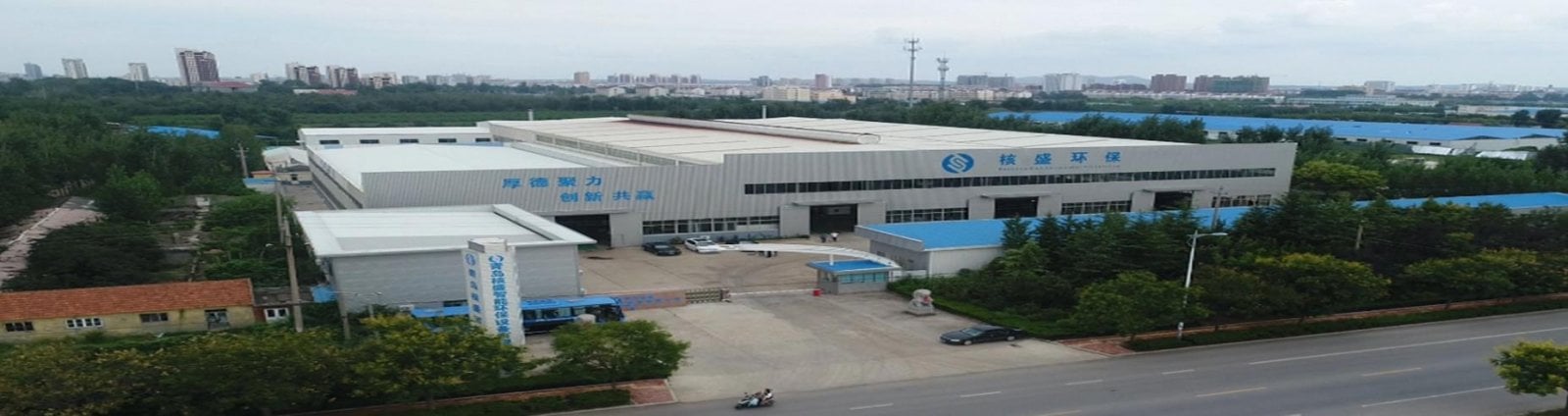
Qingdao Hesheng Intelligent Environmental Protection Equipment Co., Ltd. specializes in production, R&D and sales of intelligent filters and owns a full industry chain for vacuum belt filters. Qingdao Hesheng has many experts in filtration industry and has been focusing on R&D, manufacture, sales and service for more than 20 years, meanwhile, we have all kinds of advanced intelligent machining equipment. The rigorous quality control system, the excellent after-sales service system, the advanced innovation consciousness, Qingdao Hesheng is always leading the filter industry.Our main products as follows: Horizontal Vacuum Belt Filter, Ceramic and Ceramic Membrane Vacuum Filter, Stacked Filter Press, Horizontal Belt Pressurized Filter, Belt Vacuum Ultra-high Pressure Deep Dehydrator, Tubular Filter, High-efficiency Thickener, Energy-saving Microwave Drying Machine, High-efficiency MVR Evaporation and Concentration Equipment and other products. They are widely used in chemical industry, mining, metallurgy, fertilizer, medicine, food, paper-making, environmental protection, waste water treatment and tailings dewatering industries.
Contact us
-
No.255 Shenzhen North Road, Laixi City, Qingdao City, Shandong P.R, China
Blog

CF Ceramic Disc Vacuum Filter
CF Ceramic Vacuum Filter for Continuous Slurry Dewatering
CF vacuum ceramic disc filter is a continuous solid-liquid separation system that uses microporous ceramic plates, vacuum pressure and capillary action to separate liquid from fine-particle slurry. The ceramic disc filter is widely used for concentrate and tailings dewatering in mining, ferrous and non-ferrous metallurgy, rare metals, non-metallic minerals, sewage sludge and waste acid treatment.
Rather than limiting projects to fixed standard models, Hesheng can engineer the filtration area and machine configuration according to slurry characteristics, processing capacity, required cake moisture and site conditions.
How the CF Ceramic Vacuum Filter Works
The ceramic plate is immersed in the slurry tank, and the material cake layer is formed on its surface under vacuum negative pressure and adsorbed by the plate capillary. The liquid passes through the inside of the plate and pipes to the vacuum tank and is discharged. The cake on the plates running by main roller to drying area, and continues to dehydrate under vacuum. Then running to cake discharging area (without vacuum) to discharge the cake by ceramic scraper. After discharging, the ceramic plate runs to the back washing area; process water or compressed air will enter to the ceramic plate inside through the back washing pipes, and washing the ceramic plate holes from inside to outside. After working for one shift, the ceramic plate should be washed by ultrasonic waves and combined with low concentration acid to ensure its efficiency.
The CF series is engineered according to each project's filtration requirements. The configurations listed above are reference models rather than fixed size limits. Larger filtration areas and non-standard machine configurations can be customized according to slurry characteristics, required processing capacity, target cake moisture, operating conditions and site layout.
It is widely used in concentrate and tailings dewatering of mining, ferrous metals, non-ferrous metals, rare metals, non-metallic and environmental protection sewage sludge dewatering and waste acid treatment, etc.
Features of CF Ceramic Disc Vacuum Filter
Microporous Ceramic Plates
The ceramic plates provide a stable filtration surface with low air permeability, helping retain fine solids and produce relatively clear filtrate.
Continuous Automatic Operation
The discs rotate continuously through filtration, dewatering, cake discharge and cleaning, supporting stable and automated production.
Efficient Vacuum Filtration
The microporous ceramic structure helps reduce unnecessary air leakage and improve vacuum utilization under suitable operating conditions.
Automatic Backwashing
An automatic backwashing system helps remove particles from the ceramic pores and maintain filtration performance.
Multiple Model Options
CF ceramic disc filters are available in filtration areas from 1 to 168 m² to meet different processing-capacity and installation requirements.
Configurable Materials
Slurry-contact components and auxiliary systems can be configured according to the material's abrasiveness, pH, temperature and corrosion characteristics.
What Affects Ceramic Disc Filter Performance?
Ceramic disc filter capacity and cake moisture cannot be determined by equipment size alone.
The following factors should be evaluated during selection.
Factor Effect on Filtration
Particle-size distribution Ultrafine particles may reduce cake permeability and block ceramic pores more quickly
Feed solids concentration Influences cake formation rate, cake thickness and equipment capacity
Slurry viscosity High-viscosity slurry can slow liquid flow through the filter cake
Cake permeability Determines how easily liquid can pass through the formed cake
Disc rotation speed Controls filtration, drying, discharge and cleaning time
Ceramic plate cleanliness Blocked pores reduce filtration capacity and may affect cake moisture
Agitation condition Helps maintain consistent feed and limit solids settlement
Cleaning frequency Affects long-term plate permeability and operating stability
Ceramic Disc Filter Case Study: Copper Tailings Dewatering
Highly viscous and ultrafine copper tailings can cause ceramic-pore blockage, unstable vacuum conditions, difficult cake discharge and a gradual decline in filtration capacity.
For this application, Hesheng developed a CF ceramic disc vacuum filter using sintered white fused alumina ceramic plates with a gradient pore-size surface. The design helps reduce fine-particle penetration while maintaining liquid permeability.
The equipment also uses high-pressure pneumatic backwashing and online ultrasonic cleaning to limit pore blockage and maintain filtration performance. Anti-crystallization vacuum piping and corrosion-resistant seals improve operating reliability in tailings containing sulfate and chloride ions.
This configuration is designed to provide more stable vacuum filtration, easier cake discharge and lower cleaning requirements when processing difficult copper-tailings slurry.
Watch the CF ceramic disc filter process highly viscous and ultrafine copper tailings.
A ceramic continuous rotary disk filter is often suitable for mineral concentrates and selected fine-particle slurry where compact installation and continuous dewatering are important. A horizontal vacuum belt filter is generally preferred when the process requires controlled cake washing, flexible filtration zones or horizontal cake transport.
The final equipment choice should be based on slurry testing, required capacity, target cake moisture and process conditions.
For applications requiring multi-stage cake washing or a longer continuous filtration process, review the horizontal vacuum belt filter configuration.
Applications of CF Ceramic Disc Filters
CF ceramic disc filters are mainly used for continuous dewatering of mineral concentrates, tailings, fine-particle slurry, and selected industrial sludge. They are particularly suitable for applications that require stable cake formation, automatic discharge, and relatively clear filtrate.
Mineral Concentrates
Ceramic disc filters are widely used for iron, copper, lead, zinc, gold, and other mineral concentrates. Their continuous operating cycle helps support stable dewatering before storage, transportation, or downstream processing.
Tailings Dewatering
The CF series can be used to reduce water content in mineral tailings and recover process water. Actual performance depends on particle-size distribution, slurry concentration, viscosity, and cake permeability.
Coal and Non-Metallic Minerals
Selected coal slurry, phosphate, quartz, fluorite, and other non-metallic mineral materials may also be suitable for ceramic vacuum filtration. Material testing is recommended when the slurry contains a high proportion of ultrafine or sticky particles.
Metallurgical and Industrial Slurry
Ceramic disc filters can be applied to certain metallurgical residues, chemical slurry, and industrial sludge. For corrosive, high-temperature, or abrasive materials, the ceramic plates and slurry-contact components should be selected according to the actual operating conditions.
For ultrafine, highly viscous, or difficult-to-filter slurry, laboratory or pilot testing is recommended before final model selection.
Why Choose Hesheng as Your Ceramic Disc Filter Supplier?
Hesheng provides industrial solid-liquid separation equipment for mining, metallurgy, chemical processing and related applications.
For ceramic disc filtration projects, Hesheng can support customers with:
Equipment Selection
The equipment model and filtration area can be recommended based on actual slurry data and required process performance.
Customized Configuration
The ceramic plate arrangement, slurry-contact materials, control system and auxiliary equipment can be configured according to site and process requirements.
Material Evaluation
For difficult-to-filter slurry, material testing can help determine whether ceramic filtration is suitable before final equipment selection.
Manufacturing Quality Control
Equipment components should be inspected during material preparation, fabrication, assembly and final testing.
Installation and Commissioning Support
Installation drawings, operating guidance and commissioning support can be provided according to the project agreement.
Replacement Parts
Replacement ceramic sectors, scrapers, seals, valves and other maintenance parts can be supplied according to the equipment model.
Technical Support
As a vacuum disc filter supplier, Hesheng can provide operating guidance and troubleshooting support for filtration performance, cake discharge, ceramic cleaning and vacuum-system operation.

DI Horizontal Vacuum Tray Belt Filter
Equipment Introduction
The DI Series is a continuous indexing belt filter — a high-level automatic, new-type filtration system. This type of filter uses cloth or filter screen as the medium, allowing the slurry to be placed horizontally on the medium, using slurry gravity and vacuum suction to achieve solid-liquid separation. It applicable in many kinds of concentration material, because of the high filtering efficiency, it priority used in many industries.
Features of DI Horizontal Vacuum Tray Belt Filte
- Feeding, filtering, cake washing, cake discharging, filter cloth washing and redirection can be finished continuously and automatically, so it has high level automation.
- It can wash cake with several times clean water and filtrate,the filtrate(mother liquor) and washed liquor can be collected separately.
- It can filter quickly in a thin layer for the sludge with high viscosity and bad filtration character and has high adaptability.
- It’s flexible to assemble by its modular structure, convenient for transportation, installation and maintenance.
- It’s convenient to remote and local control by PLC control.
Washing Device
Use process water to spray washing cloth and equipped with vacuum sealing box to ensure the using site clean. The spray nozzle uses the American atomization company product to fully guarantee the washing effect.
Cake Washing Process
Adopt the overflow washing and drip spray washing devices, according to the materialand the process requirement to use clean water direct washing or the filtrate indirect washing,which can wash the cake thoroughly.
Rederection Device
Adoptcylinderor air-bag to push the redirection roller move a certain angle to adjust the cloth automatically and ensure the cloth running normally.
Control System
Adopts remoteand local alternately control, convenient for the operation workand unmannedoperation.
Working Process of DI Horizontal Vacuum Tray Belt Filter
Now price of belt filter vacuum is reasonable, anything you need, please contact us.

DU Horizontal Vacuum Belt Filter
Horizontal Vacuum Belt Filter: High-Efficiency Filtration Solutions for Industrial Slurries
The horizontal vacuum belt filter from Hesheng provides continuous, automatic, and highly efficient solid-liquid separation tailored for demanding industries such as mining, metallurgy, chemical processing, and flue gas desulfurization (FGD).
With filter areas ranging from 1–168 m² and filtering widths up to 4.5 meters, our HVBF systems ensure optimal dewatering results, reduced cake moisture content, and improved downstream process stability. For projects requiring a horizontal belt filter for sale, the listed DU specifications can be used as reference configurations. Filter area, belt width, machine arrangement, washing zones and auxiliary systems can also be customized according to the actual process requirements.
As an experienced horizontal belt filter supplier, Hesheng backs every project with real-world engineering experience, delivering tailored solutions that meet strict environmental and production targets.
Horizontal Belt Vacuum Filter's Operating Principle & Advantages
Hesheng DU horizontal vacuum belt filter adopts a fixed vacuum chamber with continuous rubber belt and high-efficiency filter cloth, ensuring reliable and efficient solid-liquid separation for a wide range of slurries. Utilizing vacuum suction, the equipment delivers consistent performance in dewatering, washing, and drying processes.
Technical Benefits:
Continuous & Fully Automated: Integrates feeding, filtration, washing, drying, and discharge in a seamless process, ensuring high efficiency with minimal manual intervention.
Superior Filtration Performance: Uniform cake formation and thorough washing improve product purity and reduce residual moisture.
Energy Efficient: Stable vacuum performance reduces energy consumption while maintaining high throughput.
Robust & Versatile: Optimized for challenging materials such as FGD gypsum, mining tailings, and chemical residues.
Low Maintenance: Simple structure and reliable operation minimize downtime and operating costs.
Whether you need a single unit or a complete horizontal belt filter for sale as part of a larger dewatering line, Hesheng can configure the right specification for your slurry.
This video shows a Hesheng DU horizontal vacuum belt filter operating on a continuous production line. It provides a direct view of slurry feeding, material distribution, continuous cake formation and discharge at the end of the filtration process.
Continuous Slurry Feeding and Cake Formation
At the beginning of the process, a large volume of slurry is evenly distributed across the moving filter surface. As the belt moves continuously through the filtration section, the slurry gradually forms a uniform and stable material layer.
Continuous belt movement allows feeding and filtration to proceed without repeatedly stopping the production line. This operating mode is suitable for industrial solid-liquid separation processes where stable throughput and continuous material handling are important.
At the end of the belt, the processed material is continuously discharged into the collection hopper below, ready for subsequent handling or processing.
Hesheng DU Horizontal Vacuum Belt Filter
Hesheng's horizontal belt filter for sale is designed for continuous filtration and dewatering of industrial slurries. Equipment configuration can be adapted according to material properties, processing capacity, filtration requirements and site conditions.
For more equipment types and configurations, see Hesheng's belt filter range.
DU Horizontal Vacuum Belt Filter 1
Common Industry Challenges & Our Solutions
Common Industry Challenges in Horizontal Vacuum Belt Filtration:
Excessive cake moisture significantly raises transportation, landfill, and drying expenses.
Inconsistent or low filtration efficiency: caused by changeable slurry characteristics, poor cake release, or blinding, resulting in reduced throughput, frequent stoppages, and overloading downstream dryers or presses.
Environmental compliance for tailings/FGD gypsum requirements: low residual moisture, high water recovery, and little chemical use.
High energy, maintenance, and downtime costs: conventional filters have belt wear, vacuum leaks, and cloth regeneration concerns, resulting in increased OPEX and productivity losses.
Hesheng DU Series Solutions:
- Using multi-zone vacuum control and improved cake formation technology, the DU series produces consistently low cake moisture content, effectively lowering transportation, disposal, and downstream drying costs.
- Our horizontal vacuum belt filter provides continuous, high-throughput operation thanks to robust belt support systems such as support rollers, slide carpet, air cushion, and friction belt design, which greatly boost productivity and reduce downstream bottlenecks.
- With high washing efficiency, good water recovery rates, and an optional enclosed dust/fume control design, the system meets stringent tailings, FGD gypsum, and wastewater discharge criteria while decreasing environmental impact and chemical use.
- The DU series, which has automatic high-pressure filter cloth washing (0.6-1.0 MPa), a modular bolted frame for simple movement and maintenance, remote PLC control, and durable wear-resistant materials, eliminates downtime, lowers maintenance costs, and provides long-term stable operation.
HVBF Technical Specifications | Horizontal Vacuum Belt Filter Parameters
The DU Series horizontal vacuum belt filter is engineered for continuous, high-efficiency solid-liquid separation, particularly suited for fine-particle, high-viscosity slurries such as FGD gypsum, mining tailings, chemical residues, and metallurgical slurries. Below are the key technical parameters.
How to Select a Horizontal Vacuum Belt Filter
Selecting a horizontal vacuum belt filter requires more than choosing a filtration area. The suitable DU configuration depends on slurry properties, required throughput, cake washing requirements, target cake moisture and available installation space.
For preliminary selection, customers can provide:
Slurry or material type
Required processing capacity
Feed solids concentration
Particle-size distribution
Target cake moisture
Cake washing requirements
Washing water availability
Operating temperature and corrosiveness
Available installation space
Continuous operating requirements
Based on these conditions, Hesheng can evaluate the required filtration area, effective belt width, filtration and washing zones, rubber belt configuration and auxiliary systems.
Features of DU Horizontal Vacuum Belt Filter
Modular design, flexible assembly and convenient transportation are implemented for structure. Also can deliver the whole assembled equipment after installation and commissioning.
The filter cloth and rubber belt operating synchronously is applied to the filter, which can be finished the process of continuous feeding, filtering, washing, drying and cloth washing.
The remote control and local control can be exchanged to achieve unmanned operations.
On the rubber belt support, we can use rollers, air cushion, pallet and multiple friction belts to reduce the friction resistance and prolong the rubber belt life time.
Use filtrate or clean water for the cake washing, and collect the filtrate by sections.
Use high pressure water for cloth washing to increase the cloth regenerative effect and the life span.
Filtrate discharge types include automatic discharge, high level discharge and auxiliary discharge.
Gas cover or aluminum plastic Windows can be designed partial closed or totally enclosed for partial insulation or the centralized collection for the volatile gas or steam of slurry.
Applications of DU Horizontal Vacuum Belt Filter & Proven Performance
Case 1: Advanced Filtration Solution for Rare Earth Carbonate Industry
Hesheng Environmental successfully delivered a customized DU horizontal vacuum belt filter to a leading listed company in the rare earth carbonate sector. This solution features a fully enclosed sliding window design, meeting the industry's stringent precision and process safety standards.
Highlights of this project:
Fully enclosed design ensures gas isolation and enhances operational safety.
Achieves high-precision filtration performance, specifically tailored to rare earth production needs.
Integrated with remote central control systems for intelligent, automated operation.
Demonstrates Hesheng's leadership in environmentally friendly and intelligent filtration technology.
Outcome:
Enhanced process safety, improved filtration efficiency, and recognition as a trusted environmental protection partner in the rare earth industry.
Case 2: Breakthrough in High-Efficiency Filtration for Silicon Slag Treatment
Hesheng's DU vacuum belt filter has achieved significant technological breakthroughs in the filtration of silicon slag, a traditionally challenging application for solid-liquid separation.
Key Benefits Delivered:
High automation reduces labor intensity and improves operational efficiency.
Large capacity enhances throughput while minimizing operational costs.
Replaces less efficient traditional filtration methods, lowering investment and maintenance costs.
Marked improvement in solid-liquid separation efficiency in silicon slag applications.
Customer Feedback:
Clients report significant reductions in operational costs, higher processing efficiency, and excellent overall performance satisfaction.
Working Process of DU Horizontal Vacuum Belt Filter
The DU horizontal belt vacuum filter operates continuously as the filter cloth and rubber belt move synchronously across the fixed vacuum chamber.
Slurry is distributed evenly onto the filter cloth. Vacuum draws liquid through the formed cake and filter medium into the vacuum chamber, while solids remain on the cloth surface. The cake then passes through the washing and drying zones according to the process configuration.
After dewatering, the cake is discharged at the end of the belt. The filter cloth is subsequently washed and regenerated before returning to the feeding section for the next filtration cycle. Filtrate and cake-washing liquid can be collected separately by section when required.
FAQs
What is the lead time for custom DU filters?
3 months to 6 months, depends on filter quantity.
How to choose the right belt width and area?
Depends on slurry properties, capacity, and washing requirements. We can do dewatering tests with sample to design the filter size.
How does the DU Horizontal Vacuum Belt Filter compare to a chamber filter press?
Unlike a chamber filter press which operates in batches, the DU belt filter operates continuously. This means no downtime for opening/closing plates, resulting in higher overall throughput, much better cake washing capabilities, and significantly lower labor costs due to full automation.
What is the typical cake moisture for FGD gypsum?
8% to 12%
Can this filter handle highly corrosive slurries?
yes, we can base on the corrosive material content to choose right model material for filter.
Do you provide installation and commissioning support?
yes, we will arrange one engineer to site for guiding installation and commissioning.